Repairs · Linwood
Garage Door Perimeter Weatherstrip in Linwood
The bedroom over the garage is always the cold room, and standing in the garage you can feel why: a steady draft along the door edges that moves the cobwebs on the wall. The seal around the opening has flattened to nothing.
Garage Door Perimeter Weatherstrip
In plain words
Winter is what wears a perimeter seal out here. Sun and cold cycles harden the vinyl until it cracks, freezing rain glues the fin to the door so the opener tears it, and salty slush sits against the bottom of the jambs and rots the wood the strip is nailed to. One visit deals with all of that: soft wood at the base of the jamb is cut out and replaced, fresh seal is fitted in continuous lengths with the corners overlapped, and the fin is wiped with silicone so ice does not bond to it. The garage stays drier and calmer through the next freeze-thaw season.
How the visit goesA length of weatherstrip along the right jamb has pulled away, nails and all, and it slaps against the trim every time the wind picks up. The wood behind it is dark and soft where it meets the floor.
Linwood
How the visit goes
How the door sits in the opening
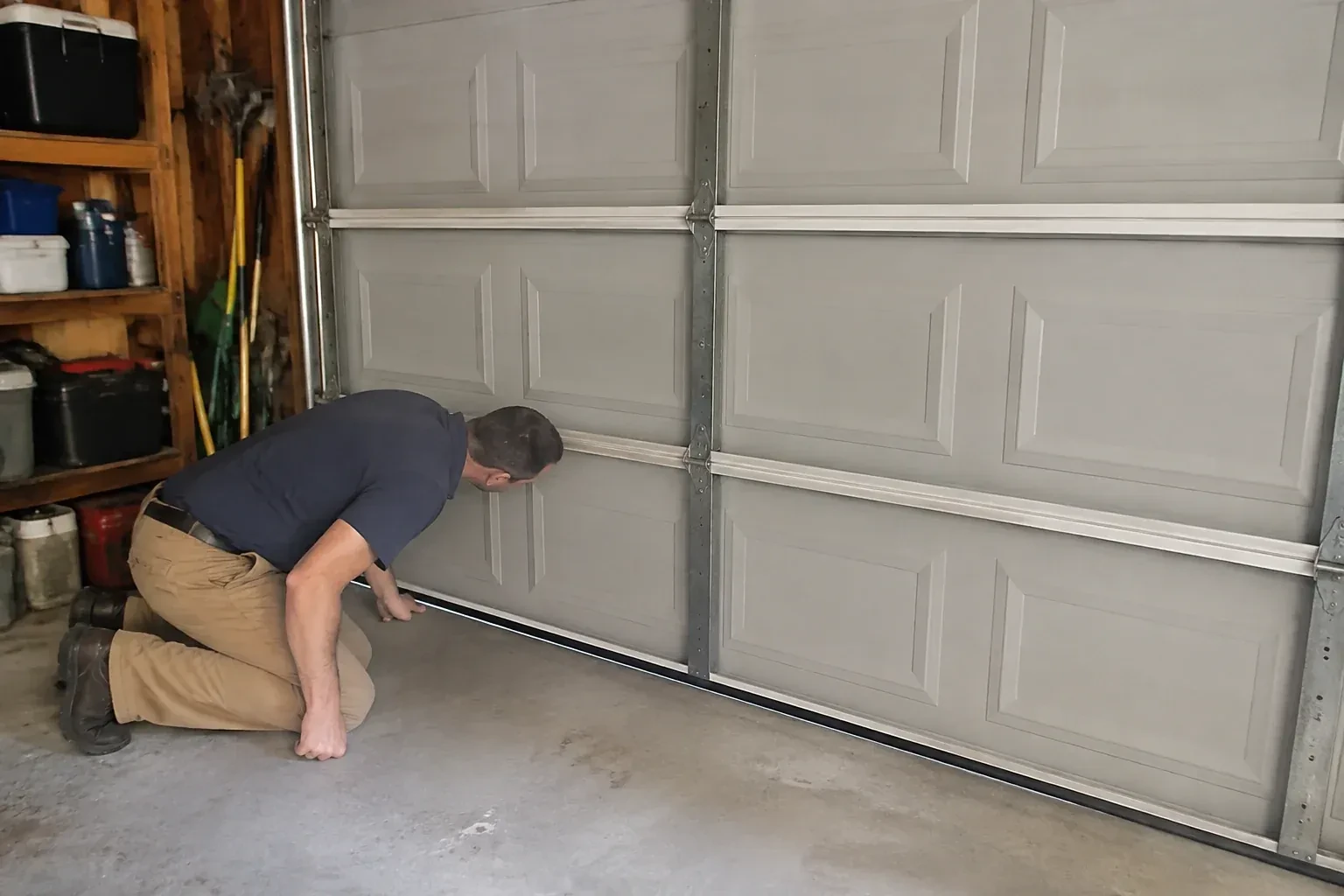
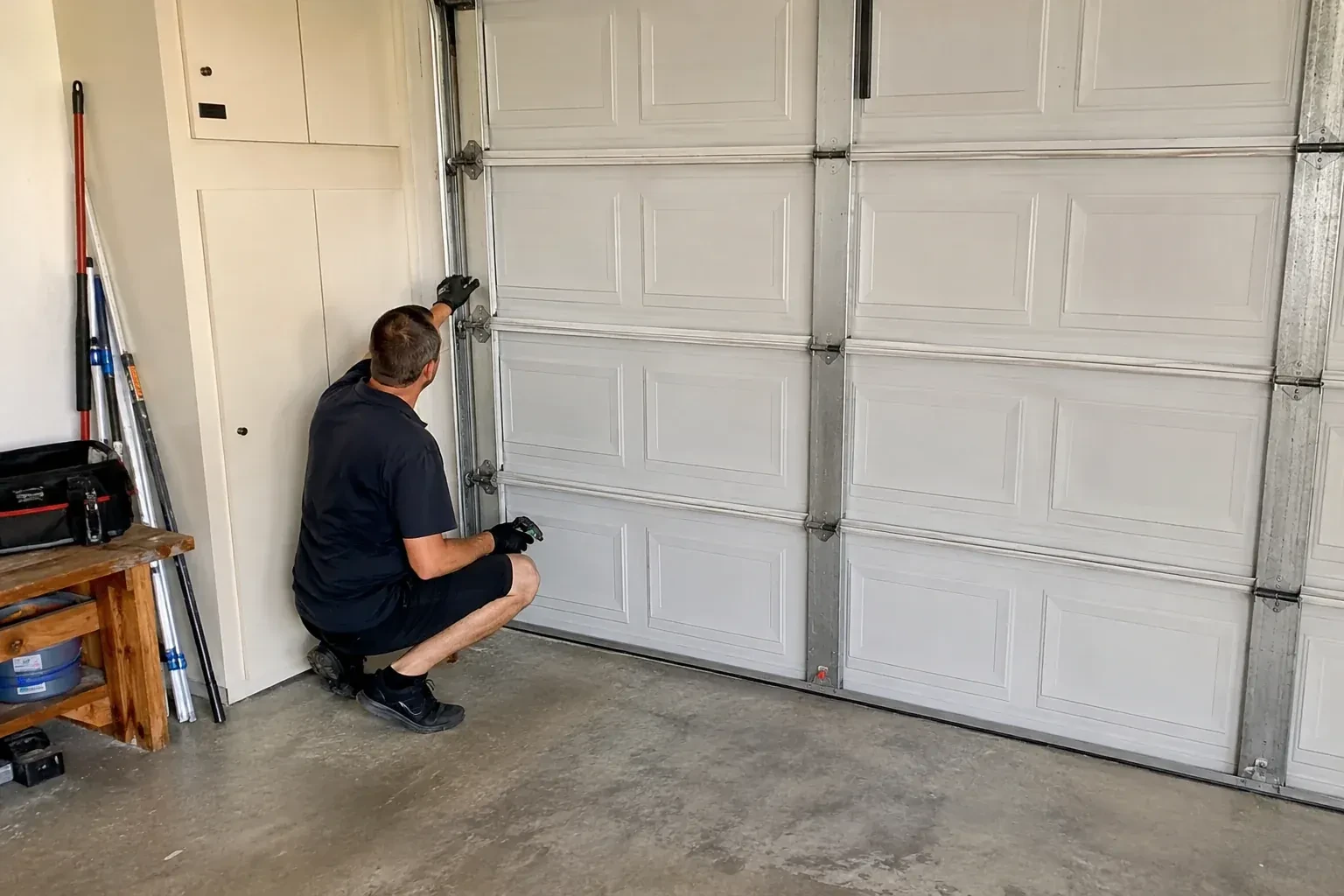
A perimeter seal can only follow a door that sits where the frame expects it, so the door is checked before any strip is ordered or cut. Each edge is checked for plumb, the gap to both jambs is compared, and the top section is watched as it meets the header to see whether it bows away or leans in. Rollers, hinges and the spacing of the vertical tracks are looked at because any of them can shift the door face toward one jamb and away from the other. Small corrections, such as re-setting a track bracket, are noted so the new seal is fitted to a door that closes square and stays that way.
Replacing the wood stop with a one-piece vinyl stop
When the old wood stop is cracked, rotten or buried in paint, it is replaced rather than covered. The one-piece stop, a rigid vinyl moulding with the flexible fin formed along one edge, is cut on a mitre saw to header and side lengths and fitted the same way, header first. It needs no paint, does not rot, and its fin and stop are one part, so the seal cannot peel away from the moulding. Corners are either mitred or the sides butted tight under the header with the fins overlapped. The result looks like fresh trim and works as a seal.
Before the freezing rain
In late autumn, wipe the fin with a silicone spray or a silicone-based lubricant on a cloth. It leaves a film that cuts the odds of meltwater bonding the fin to the cold door face during an ice storm, though a hard freeze can still catch it. Oil-based products are avoided because they swell and soften vinyl over time. The same wipe once or twice through the winter keeps the fin supple. If the door does freeze to the seal, a little warm water along the edge from inside, or simply waiting for the sun, frees it without pulling; dry the thawed spot afterwards so it does not simply refreeze.
Garage Door Perimeter Weatherstrip
In the van
- Tape measure, level and square
- Utility knife and mitre saw
- Galvanized or stainless trim nails
- Flexible vinyl fin seal
- Exterior caulking and gun
What affects the quote
Same fees day, night or weekend
1Working height and access
A tall header, a sloped driveway that makes a ladder awkward, shrubs against the jambs or cars and storage close to the door all affect how long the work takes.
2Weather on the day
Cold weather means keeping vinyl warm between the van and the opening and fitting each length with extra care, so a winter visit can run a little longer than one in mild weather.
3Jamb material
Wood jambs take nails; steel or aluminum-clad jambs need screws and sometimes a backing piece, and masonry openings need a different fixing altogether, each with its own time and hardware.
Garage Door Perimeter Weatherstrip: questions
How long does the visit take?
A straightforward fin replacement on a single door is often a matter of an hour or two once the technician is set up; a double door with a one-piece stop takes longer, and any jamb repair adds to it. Most of the time goes into checking the door, preparing the surface and setting the contact carefully, since those are what make the seal last. You are given a sense of the timing when the work is confirmed.
Does new weatherstrip make the door any quieter when it opens and closes?
A little, though it is not the main reason to do it. A fresh bottom seal cushions the door's contact with the floor, and snug side and top seals stop the panel rattling against loose or worn stops. Most of the noise people notice from a garage door comes from rollers, hinges and the opener chain or belt rather than the seals, so a technician checking the weatherstrip will usually point out those parts too if they are the louder culprit.
How is the seal fastened to the frame?
A flexible fin is nailed or stapled to the face of the wood stop with galvanized or stainless fasteners spaced evenly along its length; a one-piece vinyl stop is nailed or screwed through its rigid edge into the jamb and header. Fasteners go into sound wood, heads are set flush without crushing the vinyl, and the joint between stop and trim is caulked where water could get behind.
Repair & Maintenance
- Garage Door Tune-UpThe door lands with a thud you can feel through the kitchen floor, and sometimes it bounces back up…
- Off-Track Garage Door ResetThe morning after a thaw the opener groaned, the door stayed stuck to the icy floor for a second…
- Garage Door Panel ReplacementFrom outside, the horizontal groove between two sections now steps sideways by a centimetre.
Garage Door Perimeter Weatherstrip near you
If your door in Linwood is doing something new, there is a service here for it. Grinding usually points to rollers or hinges. A door that will not lift points to a spring or cable. A door that reverses on its own points to sensors or force settings. We diagnose first, then repair.