Springs · Waterloo
Garage Door Cable Replacement
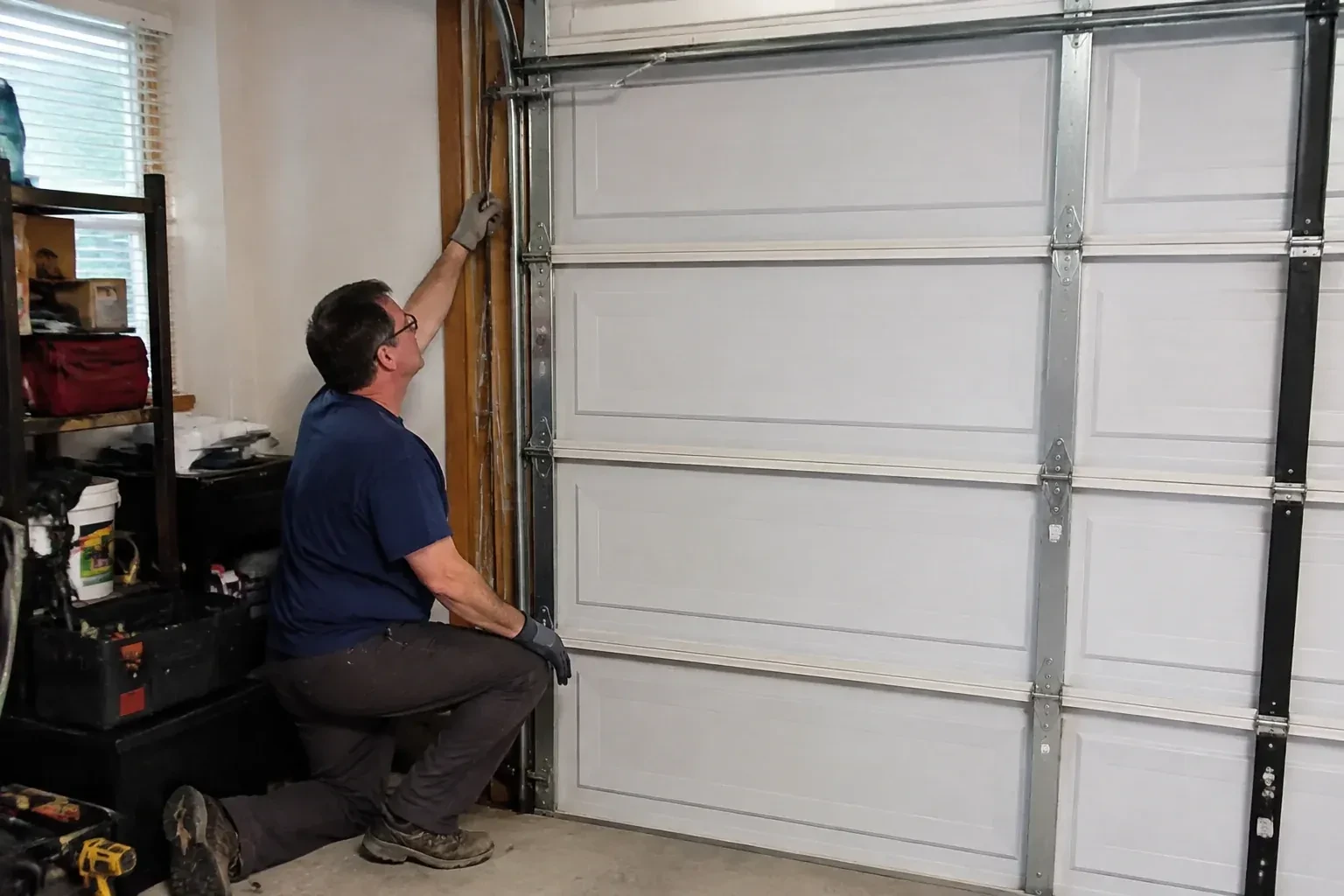
The cable has wrapped itself around the shaft above the door instead of sitting on its drum. When the opener runs, the door lurches, one side rises before the other, and the top panel twists.
Garage Door Cable Replacement
In plain words
Garage door cables carry the weight of the door as tension held by the springs, which is why the work follows a careful, well-rehearsed sequence rather than simply hooking a cable back on. On a torsion system the technician clamps the door, disconnects the opener and unloads the springs with winding bars before any cable, drum or bracket is touched; on an extension system the door is instead raised fully and clamped so its pulley-mounted springs relax. Once the system is unloaded, replacing the cables is straightforward: the correct length is set, and the counterbalance is tensioned and locked off by the method that system calls for.
How the visit goesThere was a sharp crack from the garage, and when you went to look the door had dropped on one side and jammed. A length of cable lies coiled on the floor by the bottom roller.
Waterloo
How the visit goes
Torsion or extension, and which lift
The technician identifies the counterbalance before choosing parts. A shaft with drums above the header means a torsion system; springs stretched beside the horizontal tracks with pulleys mean extension. Then the lift type: standard lift on most attached garages, low headroom hardware where the ceiling is tight, and high lift where the door climbs well above the opening before turning. Each uses a different drum profile and a different cable length, and a double door of the same height may need a heavier cable than a single. Reading these details correctly is what makes the replacement cable wind evenly on the drum instead of overlapping.
Removing the old cables
Each drum's set screws are backed off so the drum spins freely on the shaft, and the old cable is unwound from its groove and the stop slipped out of its slot. At the floor, the loop is lifted off the bottom bracket pin, or the clevis pin and cotter pin are withdrawn where the door uses them. The old cable is kept for a moment to measure against its replacement and to show you the wear that caused the call. On an extension door the cable comes off its pulleys and the adjusting clip at the track hanger. Both sides are stripped before anything new goes on.
Checking the balance yourself, safely
You can confirm the door is still balanced any time without touching a spring or cable. With the door closed, pull the opener's release cord so the trolley disconnects, then lift the door by its handle or a safe gripping point to about waist height and let go gently. A balanced door should not lift or fall far on its own; a little slow drift is normal, and what calls for a technician is rapid movement, a heavy feel, binding in the track, or a result outside the manufacturer's balance instructions, not drift alone. Reconnect the opener as the manual describes, usually by running it once. Doing this each season catches wear early and keeps the opener working lightly.
Garage Door Cable Replacement
In the van
- Torsion springs and winding cones
- Drum set screws
- Cable drums, matched pair
- Winding bars
- Extension-spring pulleys and sheave forks
What affects the quote
Same fees day, night or weekend
1Condition of the bottom brackets
A bracket bent by a bumper or corroded by years of salt is replaced while the system is unloaded. New brackets, roller and fasteners are listed as their own line.
2Access to the spring shaft
Shelving, storage or a low ceiling around the torsion shaft and drums slows the work. Clearing the area beforehand or a tighter working space both affect the time quoted.
3Worn rollers and hinges found on the way
Cracked roller wheels or split hinges seen during the inspection are pointed out and offered as optional items, since replacing them while the door is unloaded is efficient.
Garage Door Cable Replacement: questions
What is the cable drum, and when does it need replacing too?
The drum is the grooved wheel on each end of the torsion shaft that the cable winds onto as the door opens. Its grooves guide the cable in a single layer and its shape sets how the door is balanced through its travel. A drum is replaced when the grooves are worn or cracked, the cable slot is damaged, or it has spun on the shaft and scored it. Drums are changed in pairs.
Should I lubricate the cables?
A light film, yes. A mist of silicone or a lubricant made for garage doors on the cables, especially the lowest stretch near the brackets, sheds moisture and slows rust. Avoid heavy grease or oil, which holds grit and salt against the strands. The springs, hinges, roller bearings and bracket pins take the same product a couple of times a year, and the tracks are simply wiped clean.
Does the new cable have to match the old one exactly?
It has to match the door, which may not be the same thing if the old cable was wrong. Length is set by the door height, the drum profile and the lift type; diameter and construction by the door's weight. A cable that is a little long overlaps on the drum and wears; one that is short leaves the door out of level. The technician measures the door and the drum rather than trusting the old cable.
Springs & Hardware
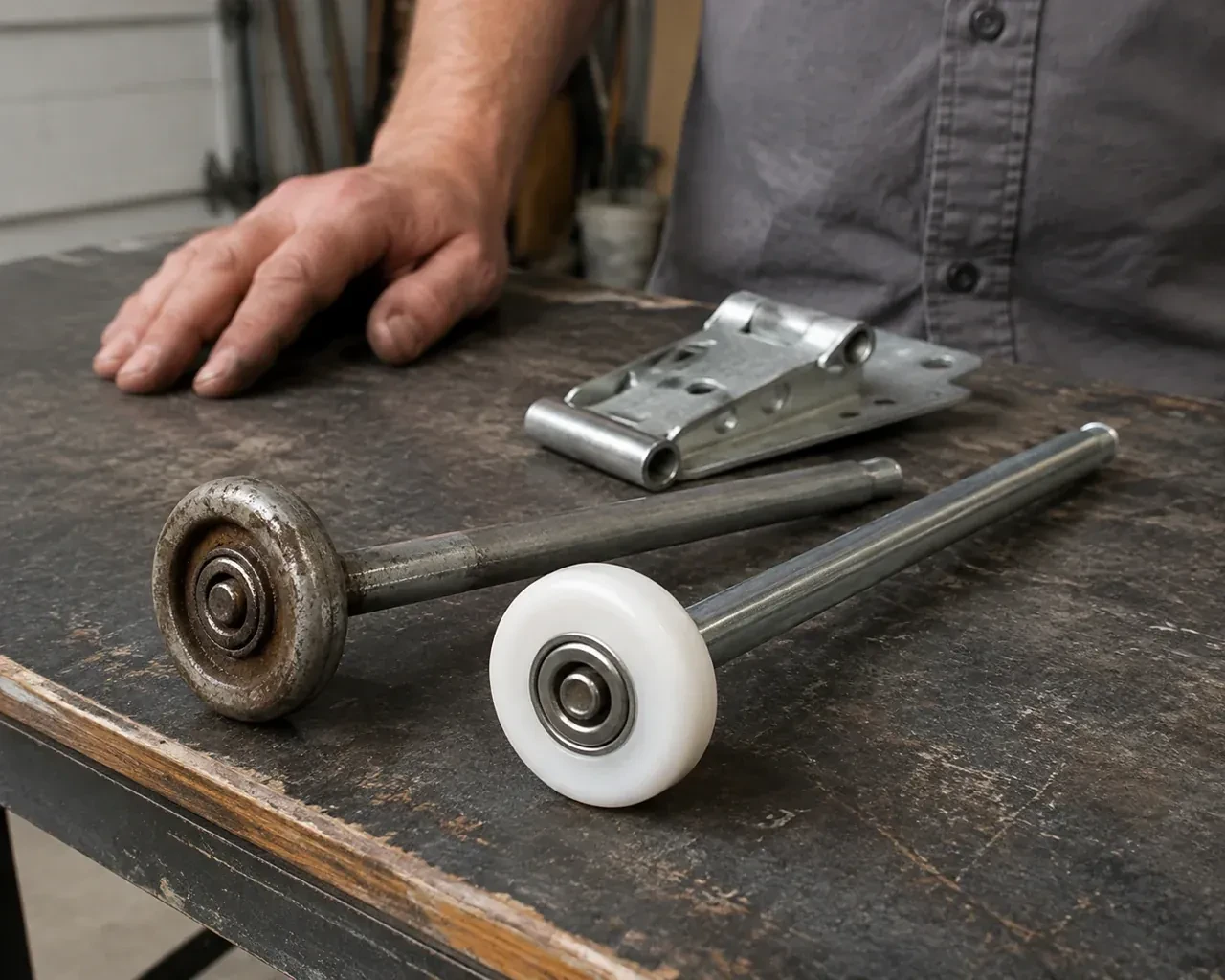
- Garage Door Hinge ReplacementWith the door closed and a flashlight on the inside face, one of the hinges near the edge has a…
- Garage Door Track Repair or ReplacementThe garage floor has settled at one corner, and the door now scrapes the concrete on that side…
- Torsion Spring ReplacementOne side of the door sits higher than the other in the tracks, and a lift cable is hanging slack or…
Garage Door Cable Replacement near you
For properties in Waterloo we service the door, the hardware that lifts it and the opener that drives it, and we install new doors and openers when the old ones are done. Residential and commercial work are both covered, each with its own parts, tools and approach.