Springs · Bamberg
Garage Door Track Repair or Replacement in Bamberg
The garage floor has settled at one corner, and the door now scrapes the concrete on that side while daylight shows at the other. The track on the low side sits crooked against a jamb that has split.
Garage Door Track Repair or Replacement
In plain words
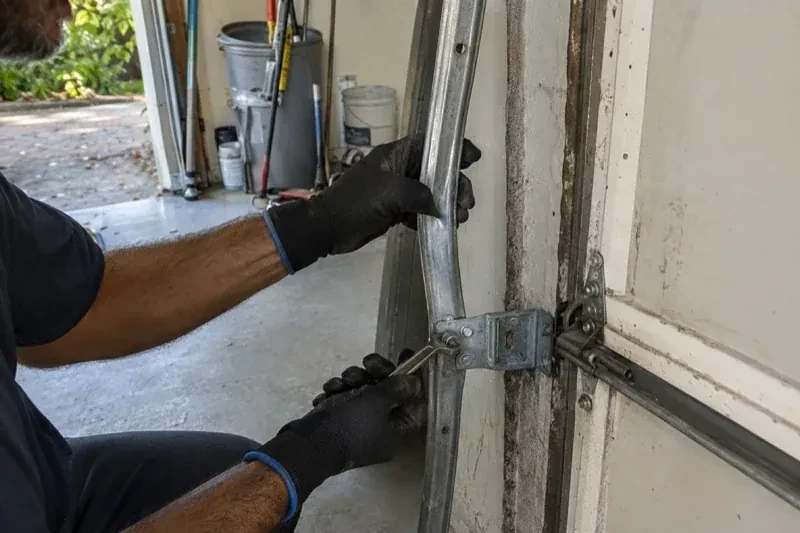
The bottom foot of a garage door track has a hard life in this climate. Slush and salt drip off the car and pool exactly where the bottom rollers sit, the jamb brackets and channel rust and thin, and a ridge of ice at the threshold can stop the door short while the opener keeps pulling. Winter track repair often means replacing the lowest section of vertical track and its brackets, sistering a jamb that has gone soft at the floor, and refixing everything into sound wood. A clear threshold and a look at the brackets each spring keep the new steel in good shape.
How the visit goesThe door climbs crooked, one side clearly ahead of the other. Nothing looks broken, but the two tracks sit different distances from the door, and one leans in toward the opening near the top.
Bamberg
How the visit goes
What bent it
The last question is why the track moved, because the answer shapes the repair. A crease at bumper height with paint transfer is impact. A track that has crept off the jamb with screws backed out is vibration and time. Rust at the floor is winter. A twisted section on one side with a slack cable beside it usually follows a cable or spring failure that tipped the door. Overhead damage tends to trace back to storage, a ladder or a hanger that gave way. You will be asked what happened before the symptom, since a shovel in the opening or a nudge from the car is a fact only you can supply.
Dressing a dent back to profile
A shallow crease in the vertical run, clear of the curve, is repaired in place. With the door clamped and the nearest roller moved out of the way, the technician works the steel back to shape with track pliers, or with a hardwood block held inside the channel and a dead-blow hammer on the outside, taking small bites rather than one heavy blow so the metal returns without stretching. A spare roller is passed through the repaired length as a gauge: it should run freely with no tight spot and no rattle. If the crease has cracked the steel or left a ridge the roller still feels, the piece is scheduled for replacement instead.
A monthly look at the brackets and hangers
Track problems announce themselves early to anyone who looks. Once a month, with the door closed and the light on, run your eye down each vertical track: the brackets should sit flat against the wood with no gap behind them and no screw heads standing proud. Then look up at the horizontal runs and the angle hangers holding them; a hanger that has begun to lean or a run that no longer looks level with its partner is worth a call while it is a small adjustment. Finish by watching the door open once, checking that every roller stays in its channel through the curve, which is the same check the industry checklist asks for.
Garage Door Track Repair or Replacement
In the van
- Top fixtures
- Flag brackets
- Jamb lumber and construction screws
- Level, plumb line and square
- Lag screws and track bolts
What affects the quote
Same fees day, night or weekend
1Damage to sections and bottom hardware
When a bumper strike has also dented the bottom section or bent a bottom bracket, that repair is described and priced separately from the track so you can decide each on its own.
2Track profile and radius
Two-inch track in a 12-inch or 15-inch radius is stock for most residential doors; three-inch track, unusual radii and high-lift pieces are ordered to the door and priced as such.
3How the door is sitting
A door resting closed is straightforward. One jammed partway on a bent section, or with rollers out of the channel, has to be supported and freed before the track can be measured.
Garage Door Track Repair or Replacement: questions
Why does the door catch at the same spot every trip?
A catch that repeats in one place is the signature of a local track fault: a dent, a spread section, a step at a joint, or a bracket that has let the track drift. Each roller reaches the flaw at the same point in the travel and bumps over it. The technician finds the spot by running a roller through the channel by hand, then dresses or replaces that length and checks the rest of the run for the same problem.
How often should the track and its fasteners be checked?
A glance each month from inside the garage, with the door closed, is enough to catch a bracket standing off the jamb or a hanger starting to lean. Twice a year, snug the bracket bolts and lag screws, wipe out the channel, and watch the door make a full trip to confirm every roller stays in the track. The industry guidance also suggests an annual visit by a trained door technician, who checks the track with the rest of the system.
Should I keep using the opener while the track is bent?
It is better to leave the door where it is and use another way in and out. An opener pushing a door through a damaged section pulls rollers out of the channel, twists the top section and can turn a small dent into a jammed door off its track. Industry guidance after any impact is to stop operating the door and have it assessed. Leaving it still keeps the repair small.
Springs & Hardware
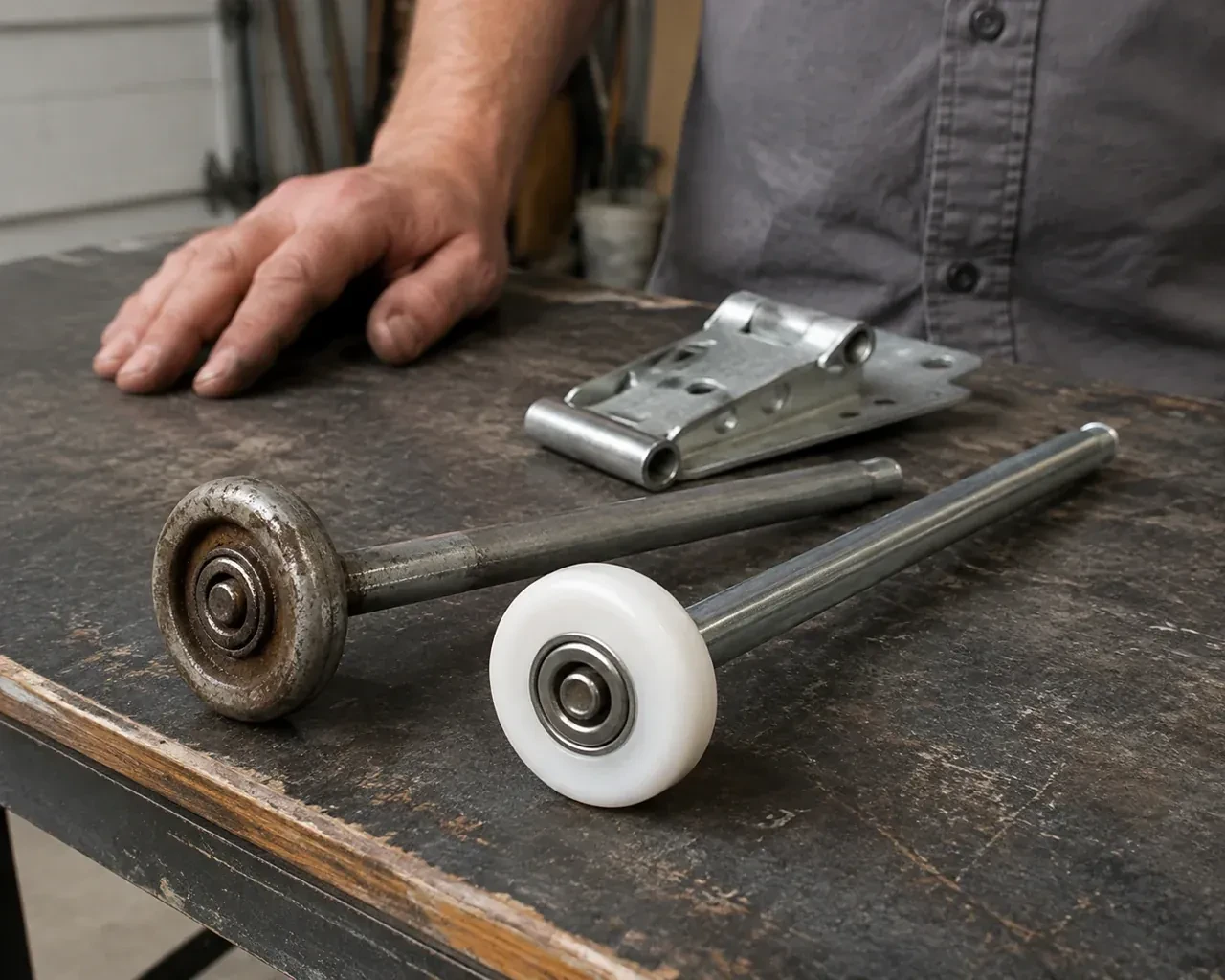
- Garage Door Hinge ReplacementWith the door closed and a flashlight on the inside face, one of the hinges near the edge has a…
- Garage Door Cable ReplacementThe cable has wrapped itself around the shaft above the door instead of sitting on its drum.
- Torsion Spring ReplacementOne side of the door sits higher than the other in the tracks, and a lift cable is hanging slack or…
Garage Door Track Repair or Replacement near you
Homeowners in Bamberg can read below about the repairs we make most, the parts we replace, the opener and remote work we do, and how a new door is chosen and installed. Commercial customers will find rolling and sectional door service alongside the residential pages.