Erbsville Garage Door Services
Issue 3 of 3Garage DoorsWaterloo, Ontario
Chain-Drive Opener Repair: how the work is done
The most common chain-drive failure happens out of sight.
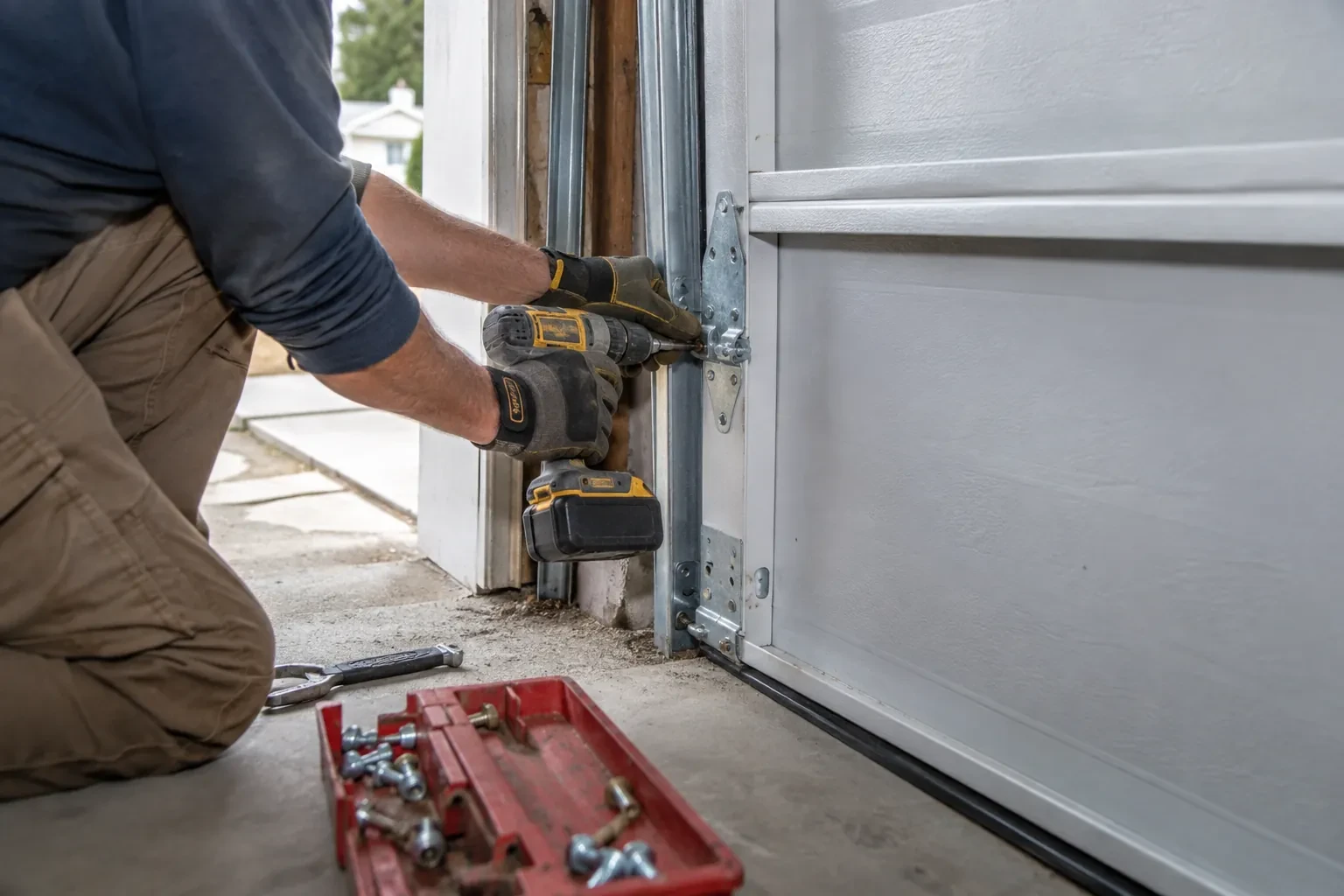
The most common chain-drive failure happens out of sight. Inside the motor head a plastic drive gear meshes with a steel worm on the motor shaft, and after years of lifting a door that has grown heavier its teeth wear away. The motor keeps running, but the sprocket above it turns weakly or not at all, and pale shavings collect under the cover. The repair fits a new gear and sprocket assembly made for that model, greases it properly, and then asks why the gear wore out. Usually the answer is a door that needs spring attention, and settling that is what protects the new gear.
Trolley, release lever and the stop bolt
The trolley is looked at in two ways: where it sits and how it is wearing. With the door closed, the trolley should rest near the door end of the rail without touching the stop tab; with the door open, short of the stop bolt near the head. A trolley jammed against either stop explains a humming motor. The release lever is checked for a bent arm or a worn latch that lets the trolley slide past the door arm without picking it up. The technician also confirms the trolley and the motor agree about the door's position, since a chain that was run off the sprocket puts them out of phase and no amount of limit adjustment corrects that.
Truing and securing the rail
A rattling or flexing rail is corrected before any adjustment is trusted. Loose lag screws in the header bracket are tightened or moved to fresh solid wood, and a bracket that has split the framing is re-mounted. The angle-iron hangers at the head are tightened and braced diagonally so the head cannot swing, and the rail is checked with a level along its length and set with a slight fall away from the header so the trolley runs freely. Splice plates at rail joints are snugged and any burr where the trolley has caught is dressed smooth. The rail is then wiped of old grease and given a thin coat of white lithium grease where the trolley runs.
A drive that runs true again
What you have afterwards is a chain that sits at its measured height, rides the sprocket without skipping and carries the trolley the full length of a rail that no longer moves. The door starts and stops where it should, meets the floor without bouncing back and opens to its full height. The sound settles to the steady run a chain drive is meant to have, with the slap, clack or grinding gone. The technician shows you the replaced parts so you can see what wore out, and runs the door for you a few times so you know what normal now sounds and looks like.