Springs · Waterloo
Extension Spring Replacement in Waterloo
One of the springs beside the track is hanging loose at the front end, its pulley dangling, and a length of cable lies slack along the top of the door. The door sits slightly crooked and the opener reverses whenever it tries to close.
Extension Spring Replacement
In plain words
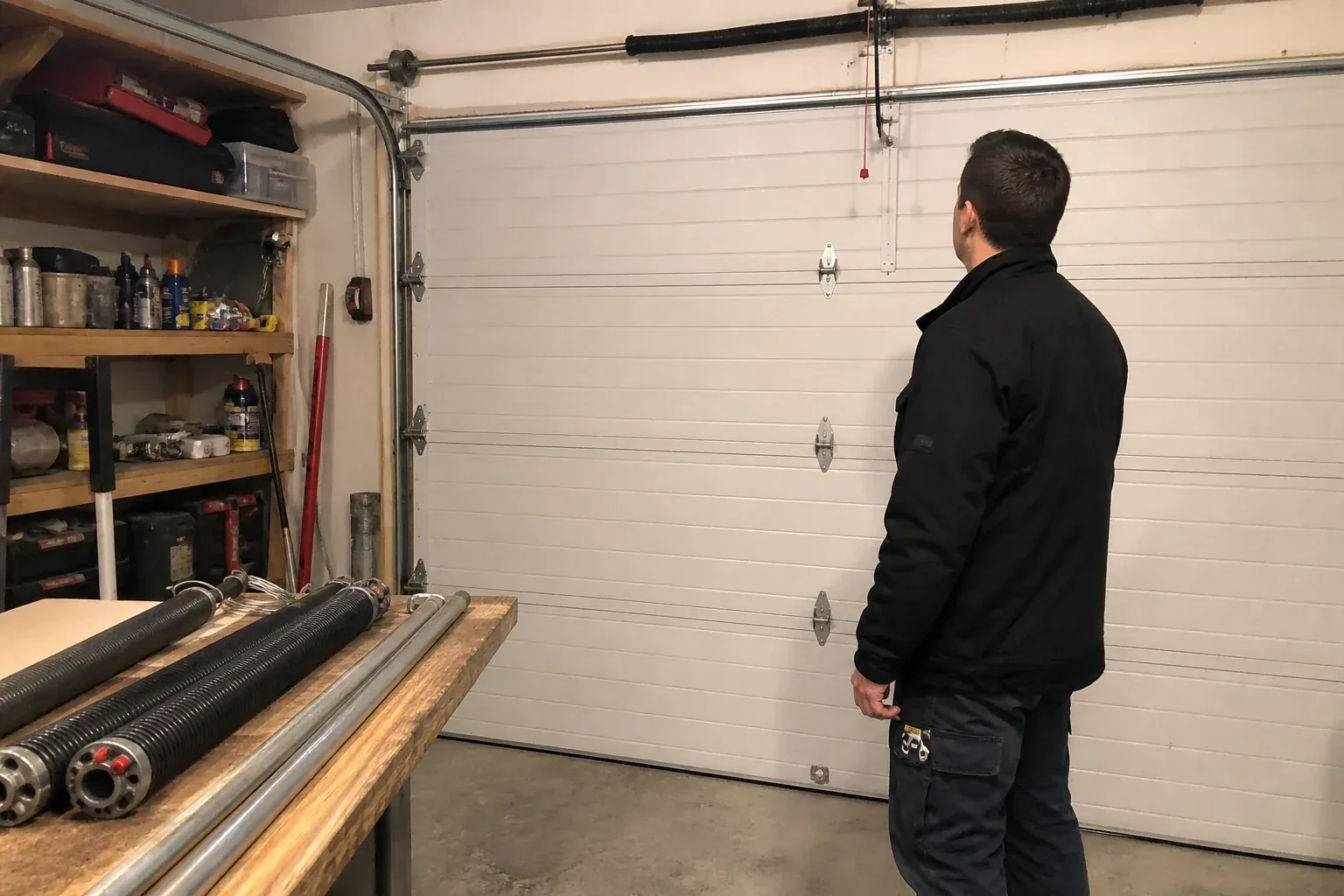
Garage doors are balanced by one of two spring systems, and the extension kind is the one you find on many single-car doors and older detached garages. Instead of a spring wound on a shaft above the opening, an extension system uses two springs stretched along the horizontal tracks, working through pulleys and cables. It needs less headroom, which is why it suits garages with a low ceiling. Replacing these springs is its own service with its own parts: springs chosen by door weight, pulleys, S-hooks and containment cables. A technician confirms which system is on your door before any part is chosen.
How the visit goesIt is the first hard frost of the year and the door on the old detached garage has stopped halfway, squealing at one pulley. The springs are the ones that came with the door decades ago, orange with rust where they hang near the back wall.
Waterloo
How the visit goes
Torsion or extension, and which extension layout
The technician confirms the counterbalance type before choosing any part. Extension springs hang beside the horizontal tracks, one each side, with a pulley on the front end of each spring and a second, fixed pulley on the track angle near the door opening; the lift cable runs from the bottom corner over both. A torsion system has a spring on a shaft above the opening and belongs to a different service. Extension systems also vary: single or double springs per side on heavier doors, hangers fixed to the ceiling or to the rear track support, and cables that adjust at an S-hook, a clip or an eyebolt. Each affects the parts brought to the job.
Running the lift cables
Each lift cable starts at the bottom bracket, where its loop goes over the pin or is secured with a clevis pin. From there it runs up the vertical track, over the fixed pulley at the front of the horizontal track, back along the track to the pulley on the end of the spring, around it, and forward again to the S-hook or adjusting clip at the front hanger. The technician keeps the cable seated in each pulley groove and makes sure it passes on the correct side of the containment cable and the track. Cables are renewed if the old ones showed any fraying or rust, and always as a pair of the same length.
A door that lifts as it was designed to
The difference is felt the first time you pull the release cord and lift the door yourself. It rises with one hand, pauses where you leave it, and comes down at the speed you lower it rather than dropping the last stretch. Under power, the opener runs without the strain in its note that had crept in as the old springs tired, and the door reaches the floor evenly along the seal. Both springs now stretch to the same length as the door closes, both pulleys turn without a squeal, and the cables lie in their grooves. A door in this condition puts little wear on the opener, which is good news for the motor.
Extension Spring Replacement
In the van
- Lag screws and hanger bolts
- Track clamps or locking pliers
- Extension springs, matched pair
- Containment (safety) cables
- S-hooks and adjusting clips
What affects the quote
Same fees day, night or weekend
1Getting the van to the garage
A detached garage down a shared laneway, a rural property or a building with the bay behind a gate takes more time to reach and set up in, and the quote allows for that.
2Opener adjustment and testing
Resetting the opener's force and travel to the newly balanced door and running the reversal tests is a short task that the quote names when it applies.
3Working room around the springs
Shelving, a stored canoe or a car parked under the tracks slows the work along the horizontal run. Clearing the sides of the garage beforehand keeps the time on the quote short.
Extension Spring Replacement: questions
My springs squeak and twang. Is that normal?
Some noise is ordinary. Extension springs stretch and relax on every trip, and a dry coil or a pulley with a dry axle will squeak, especially in cold weather; a light spray of lubricant along the springs and a drop on each pulley usually quiets it. A sharper twang, or a new grinding from a pulley, is worth a look, since a stiff pulley loads the spring and wears the cable.
What is a safety cable, and does my door need one?
A safety or containment cable is threaded down the inside of each extension spring and fixed at the hanger behind and the bracket in front. It carries no load in normal use. If a spring snaps, the cable keeps the broken halves in place beside the track. Every extension-spring door should have one each side, and the industry's inspection checklist asks for it. Doors installed decades ago often have none; they are added with the new springs.
Only one spring broke. Why replace both?
The two springs are the same age and have stretched the same number of times, so the one still hanging is close behind. There is also a balance reason: a door lifts level only when both sides pull equally, and a new spring beside a worn one lifts its corner first and twists the door. Fitting a matched pair sets both sides the same and avoids a second visit a few months on.
Springs & Hardware
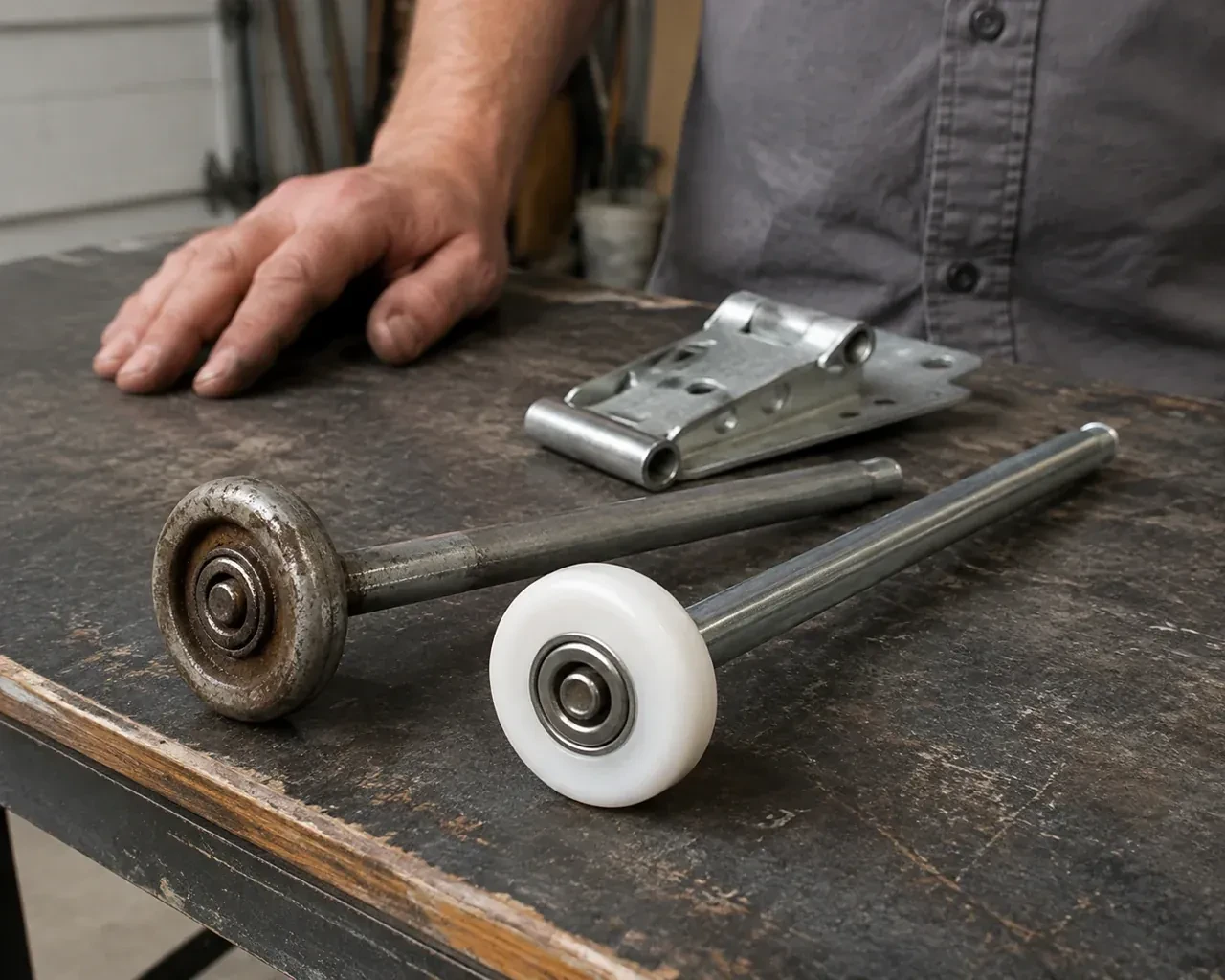
- Garage Door Hinge ReplacementWith the door closed and a flashlight on the inside face, one of the hinges near the edge has a…
- Garage Door Track Repair or ReplacementThe garage floor has settled at one corner, and the door now scrapes the concrete on that side…
- Garage Door Cable ReplacementThe cable has wrapped itself around the shaft above the door instead of sitting on its drum.
Extension Spring Replacement near you
For properties in Waterloo we service the door, the hardware that lifts it and the opener that drives it, and we install new doors and openers when the old ones are done. Residential and commercial work are both covered, each with its own parts, tools and approach.